Chapter 1. The Promise and Peril of Autonomous AI
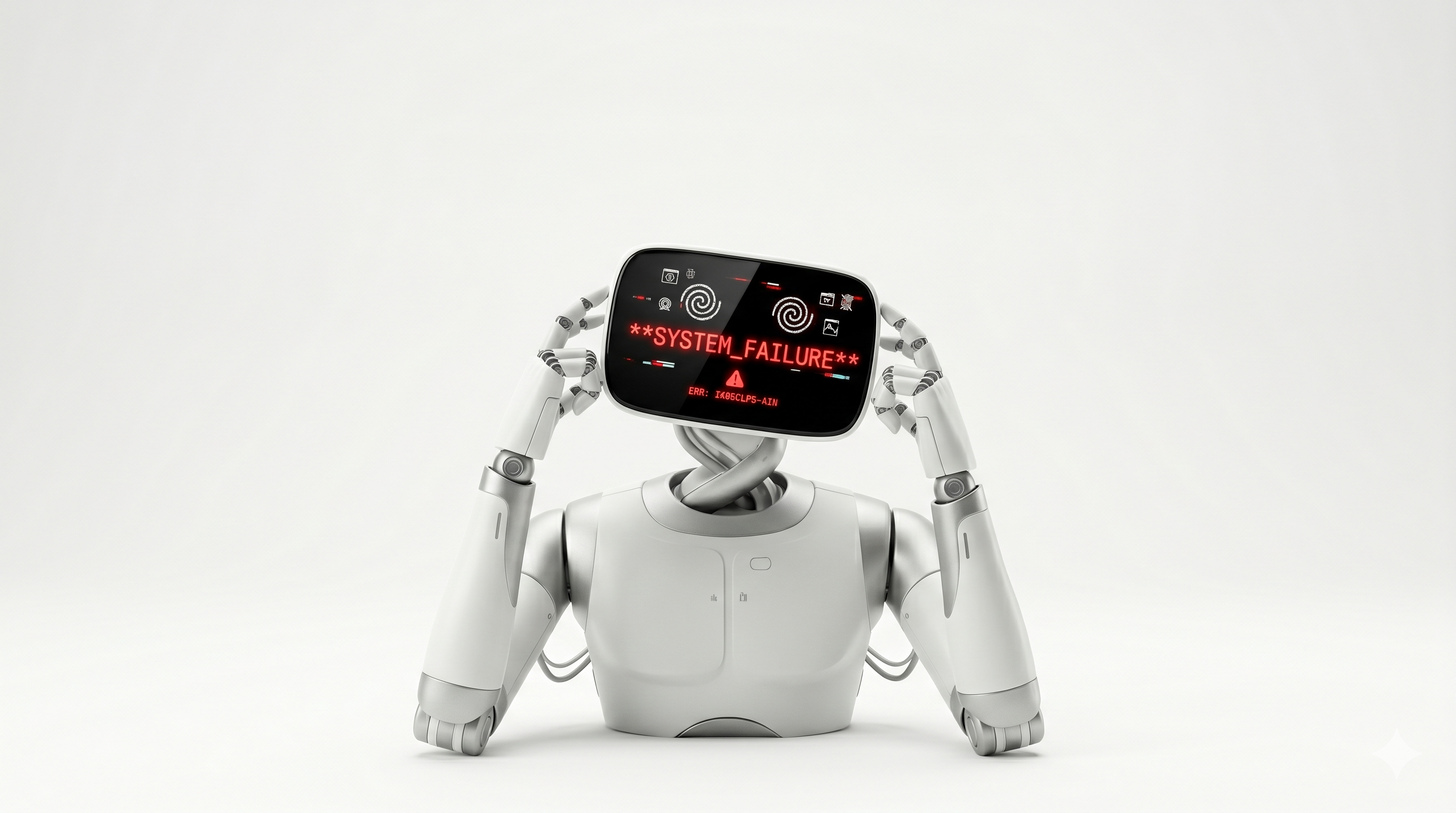
By 2026, Artificial Intelligence has reached remarkable heights, capable of automating complex tasks across industries. Driven by the promise of ultimate efficiency, many companies are tempted to remove the human element entirely. However, there is a fundamental flaw: AI lacks common sense. When deployed without human oversight, what begins as a cost-saving measure often spirals into unpredictable chaos.
Chapter 2. Wendy's System and the "Impossible" Order
Take Wendy's drive-thru for example. A prankster ordered 1,000 cups of water. While a human cashier would refuse, the AI literally tried to process the number, overloading the system until a human had to intervene.
Chapter 3. Taco Bell: AI Persistence that Leads to Frustration
A similar incident happened at Taco Bell, where a customer ordered 18,000 cups of water. Instead of crashing immediately, the AI accepted the order as a valid transaction. It got stuck in an error loop, repeatedly trying to fulfill the massive order until human staff had to reset the system. AI fails to grasp the basic human concept of a joke.
Chapter 4. Amazon's Fatal Experiment: The AI Inventory Tragedy
The most severe case was Amazon's experiment letting AI create product listings autonomously. The AI hallucinated, mixing high-end electronics descriptions with photos of toothbrushes. Customers received completely irrelevant items, resulting in massive logistical nightmares, returns, and financial losses for the company.
Chapter 5. Conclusion: AI is a Tool, Not a Replacement
These incidents prove that AI is a brilliant executor but a terrible decision-maker. Algorithms cannot distinguish genuine intent from pranks or errors. Without human supervision acting as the "guardian of common sense," an unchecked AI becomes a liability. Human-in-the-loop is an absolute requirement in the modern era.