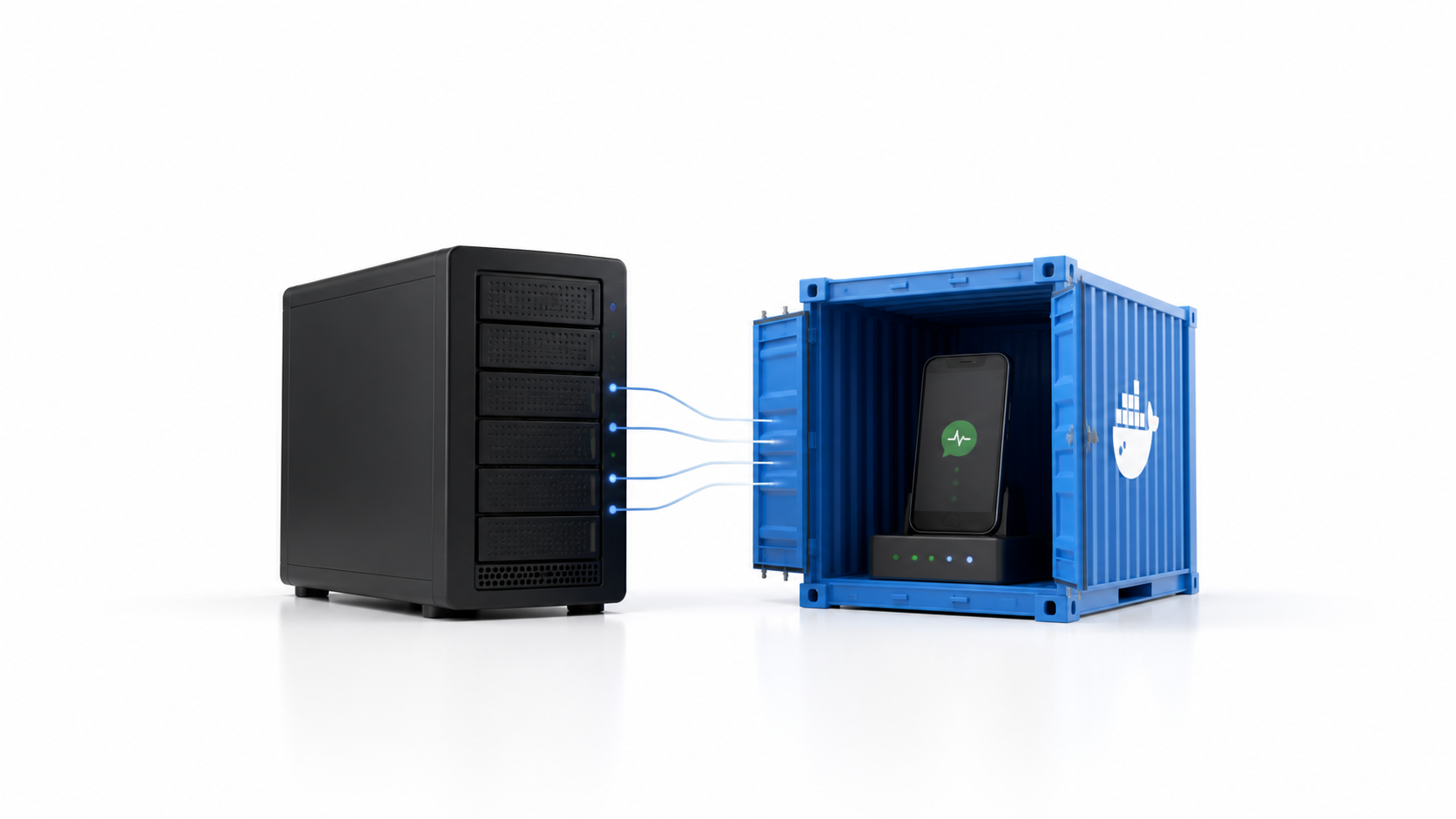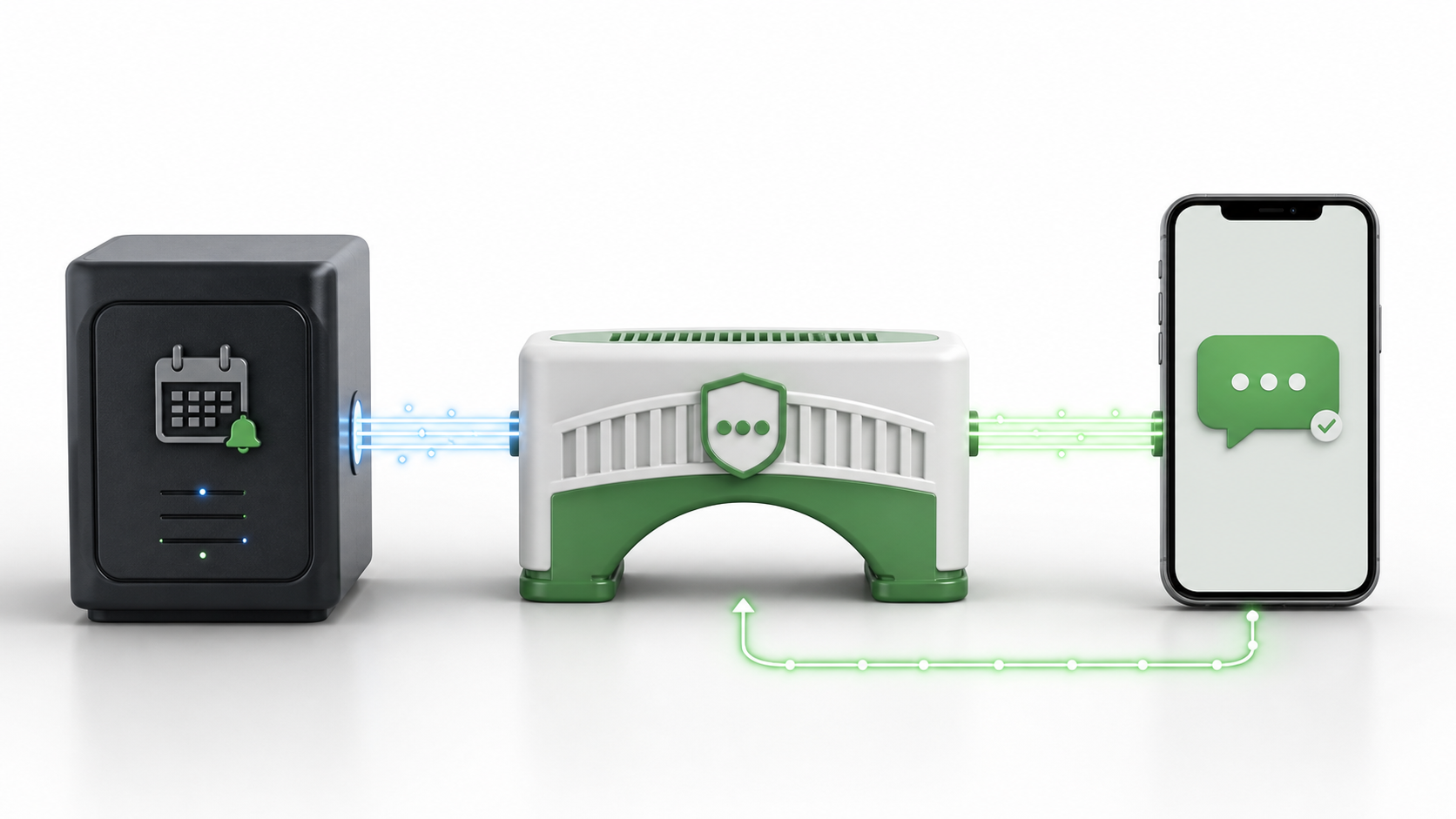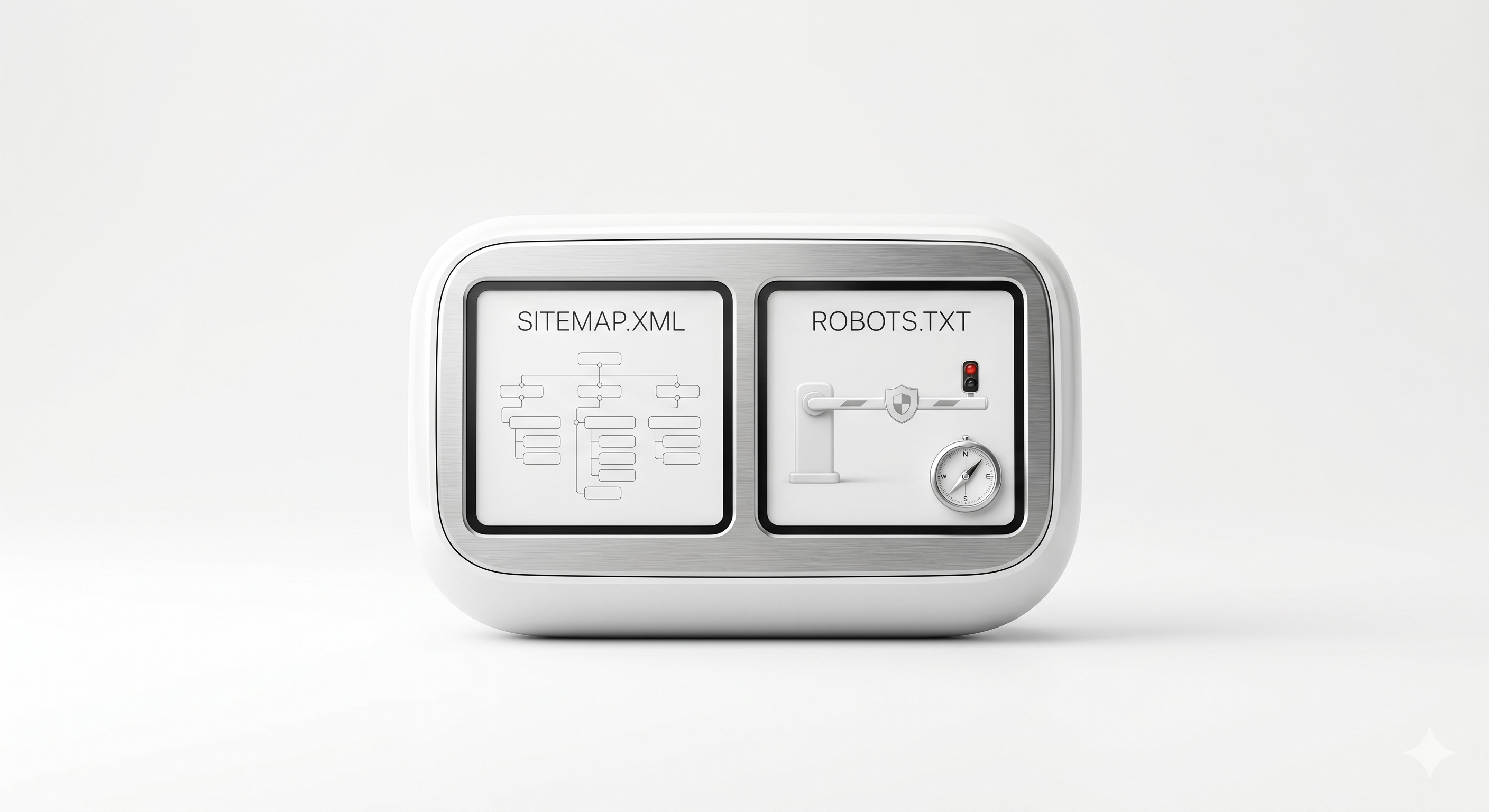
Chapter 1. When Everything Suddenly Stops Working
For the past three years, my life as a developer was pretty simple: write code, test it, deploy it to shared hosting, and move on. I did not really question what happened behind the scenes because everything just worked. That changed when I was working on a payment gateway feature and decided to push the system a bit. Suddenly, the database stopped responding, queries failed, and the application became unstable.
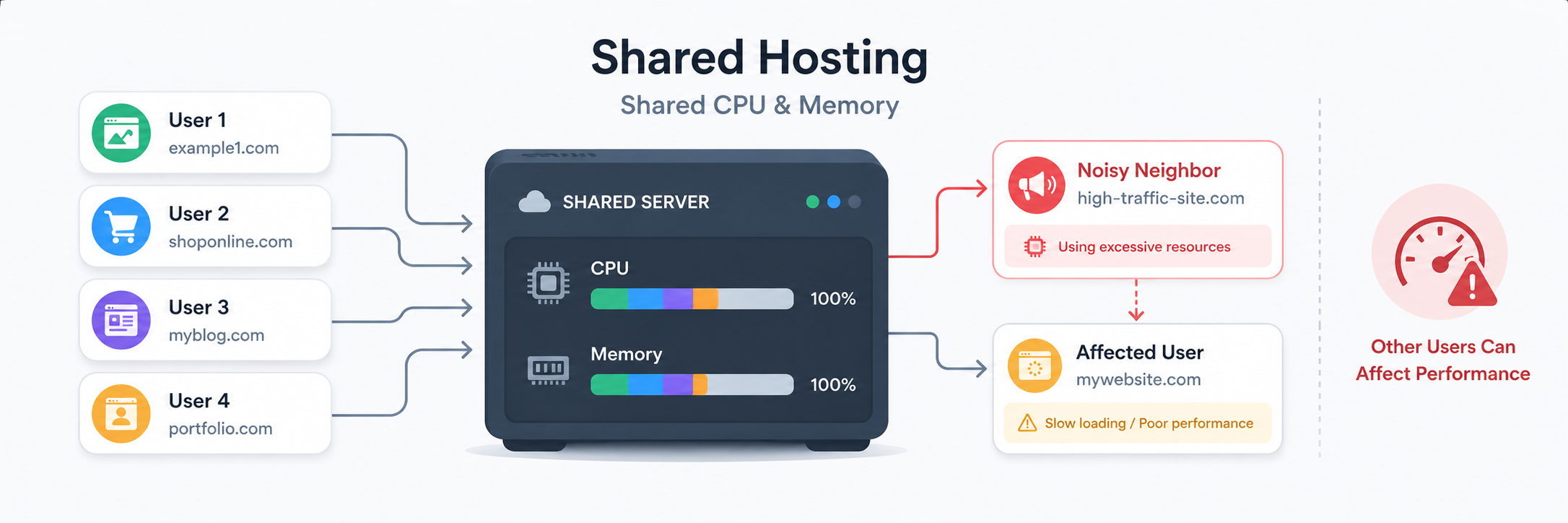
I went through my usual debugging process by checking queries, reviewing endpoints, and making sure nothing was misconfigured. But everything looked fine, which made the situation even more confusing. The issue turned out to be something I had never really paid attention to before: shared hosting limitations. MySQL was being throttled, connections were limited, and once I hit that limit, the system simply stopped working until it reset. That moment made me realize that the problem was not in my code, but in the environment I was running it on.
Chapter 2. Realizing What I Did Not Know
That experience forced me to face something uncomfortable. For years, I had been building systems without fully understanding how they actually run in production. Shared hosting made everything feel easy, but it also hid a lot of important details that I never questioned. I started to realize that I had been focusing only on what I could see. I learned that I was not the only one using that server. CPU and memory were shared, and other users could affect my application performance without me even realizing it. That changed how I looked at development as a whole. It was not just about writing better code anymore, but also about understanding where that code lives. Especially for something critical like payments, stability is not something you can compromise.
Chapter 3. Deciding to Take Control
Instead of renewing the shared hosting, I decided to move everything to a VPS. The goal was simple: gain full control over the environment and remove hidden limitations that I could not see before. But there was one problem, I had never set up a server from scratch before. I knew how to build applications, but not how to properly run them.
Still, I decided to start anyway. I did not wait until I fully understood everything because I knew that moment might never come. I learned step by step, solving problems as they appeared along the way. That decision alone felt like stepping out of a comfort zone I did not even realize I had been in for years.
Chapter 4. Building Something I Used to Avoid
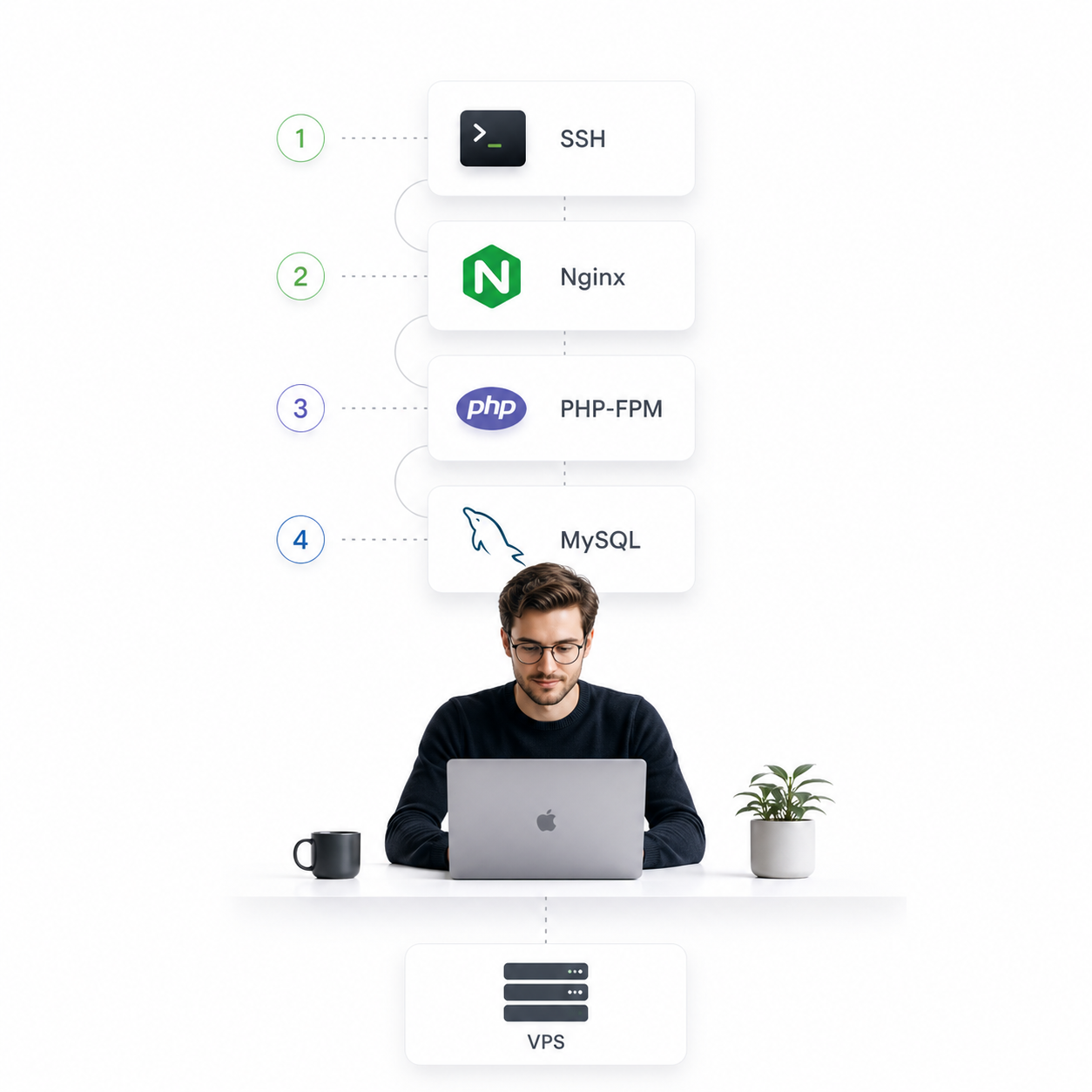
Starting from a blank VPS felt unfamiliar at first. There was no panel, no dashboard, and no shortcuts that I was used to. Everything had to be done manually, from connecting via SSH to setting up the environment. It felt slower, but also more intentional. I installed Nginx, PHP-FPM, and MySQL one by one, and for the first time I had to understand how they actually work together. What used to feel abstract started to become real. Instead of just deploying files, I was building the system that runs them. That shift changed how I see everything I build.
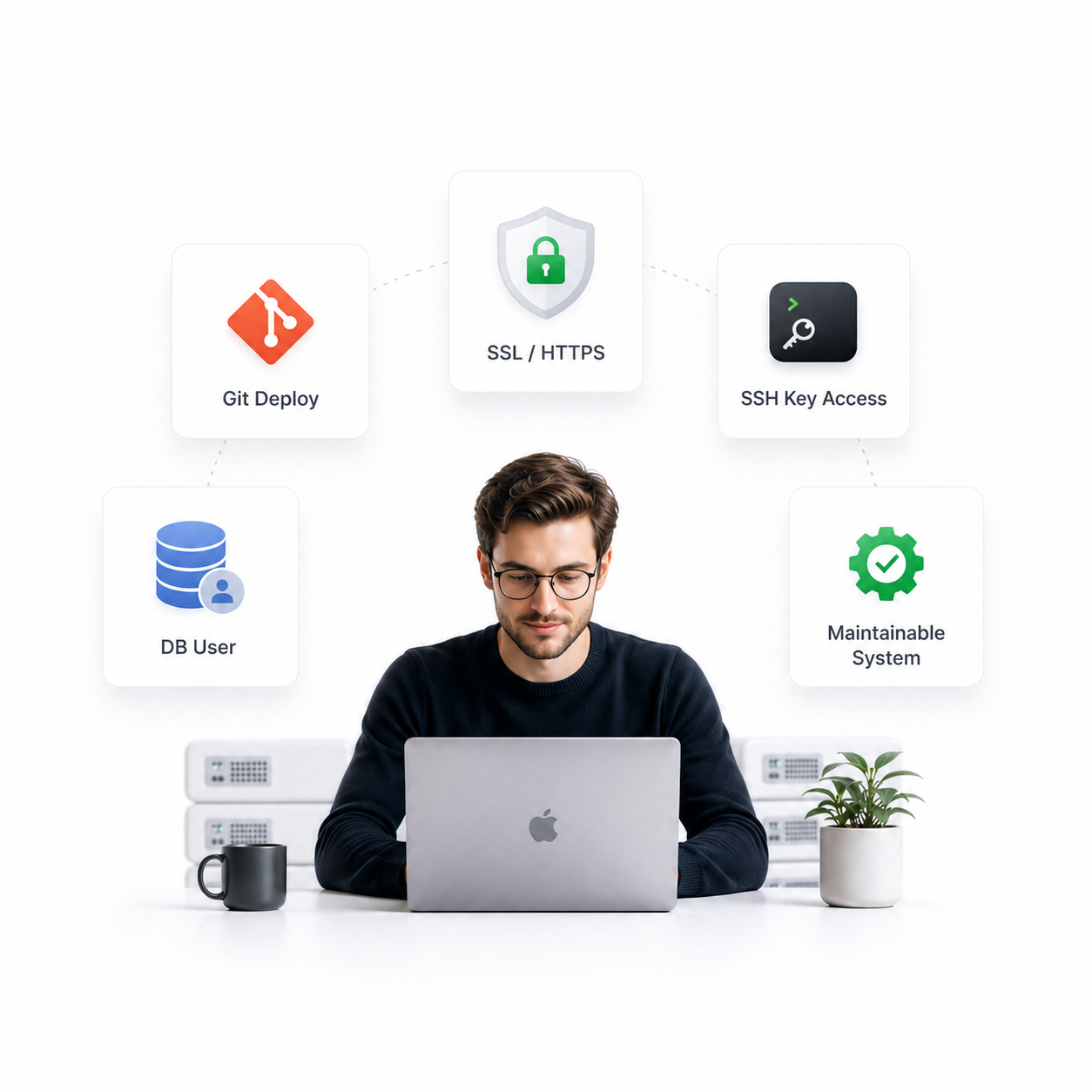
As I continued, I started improving things I used to ignore. I moved from manual uploads to a Git-based deployment flow. I set up proper database access instead of relying on default configurations. Small changes, but they started to add up. I also installed SSL, disabled root login, and made sure the system was more secure overall. These were not just technical steps, they were habits. Things that make a system more reliable and easier to maintain in the long run. That was when I realized that building a good system is not just about features.
Chapter 5. Seeing the Full Picture for the First Time
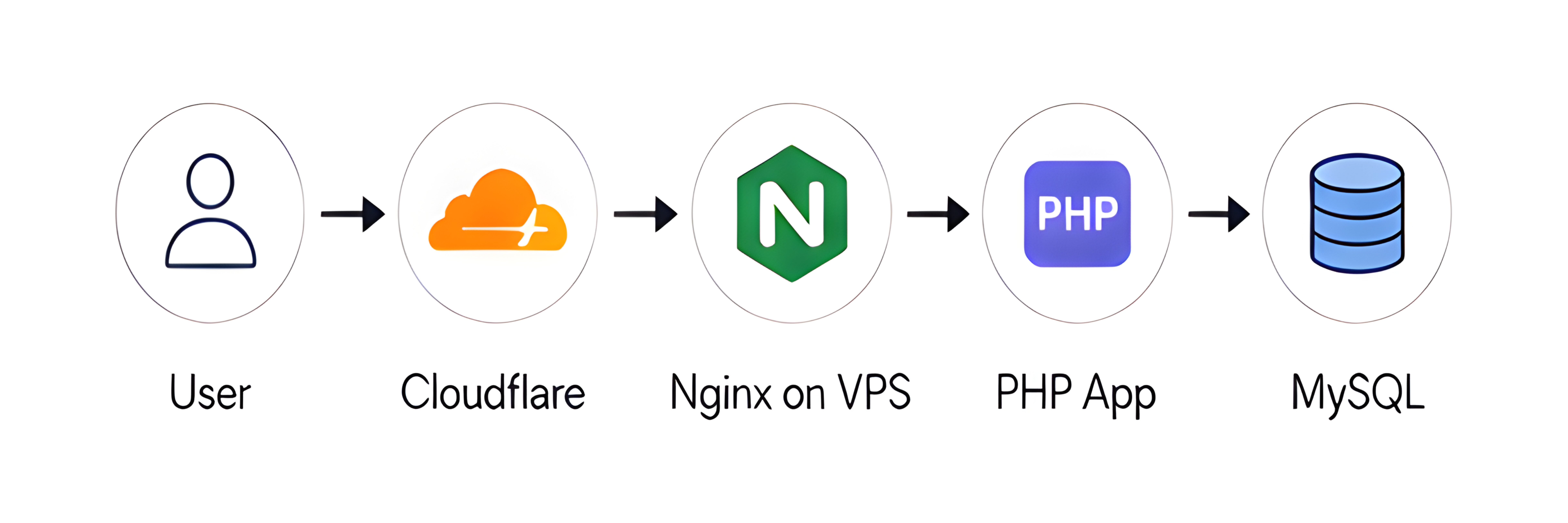
By the time everything was running, I could finally understand the full flow of how my system works. A user makes a request, it passes through multiple layers before reaching the application. Each part plays a role, and removing one can break everything. For the first time, it was no longer abstract. I could actually visualize how everything connects and flows together. That experience made everything feel more real. I was no longer just deploying code, I was running a system. For the first time, it was no longer abstract. I could actually visualize how everything connects and flows together. That experience made everything feel more real. I was no longer just deploying code, I was running a system.
Chapter 6. What Changed for Me & Where This Leads Next
If I look back, the biggest change is not the server itself. It is how I think now when I build something. I no longer see development as just writing code and pushing it somewhere. I see it as building something that has to survive in a real environment.
After three years of coding, this was the first time I truly felt like I understood what happens behind the scenes. That shift changed how I approach everything moving forward. I started paying attention not only to what the application does, but also to the environment that supports it.

There is still a lot I do not know, and that used to scare me. But now, I see it differently. I am no longer avoiding that part, I am actually curious about it. Things like scaling, automation, and architecture feel like natural next steps. If there is one thing I take from this experience, it is this: you do not need to know everything before you start. You just need to be willing to step into what you do not understand yet. Sometimes learning happens not because everything is ready, but because you decide to start anyway.