Chapter 1. Extending the Experience
After the event day, the project continued as a post-event extension designed to keep the Rides Collective platform useful beyond the live schedule. The work introduced a public gallery for event documentation, a feedback flow for collecting visitor impressions, and internal admin updates for reviewing responses and managing follow-up content.
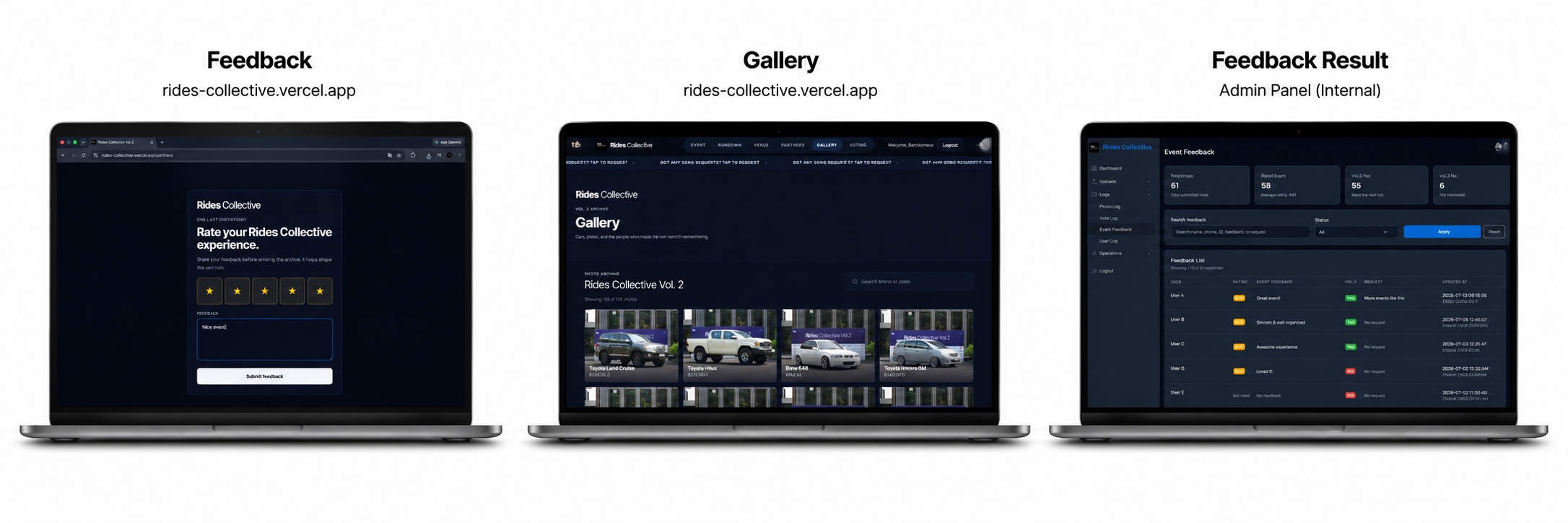
My responsibilities covered building the gallery experience, developing the feedback collection flow, updating the related admin workflows, and aligning these additions with the visual identity established during the landing-page phase. Together, these updates created a more complete event close-out: visitors could revisit the documentation, while the internal team gained a more structured way to review feedback and handle post-event follow-up.
Chapter 2. The Problem and the Response
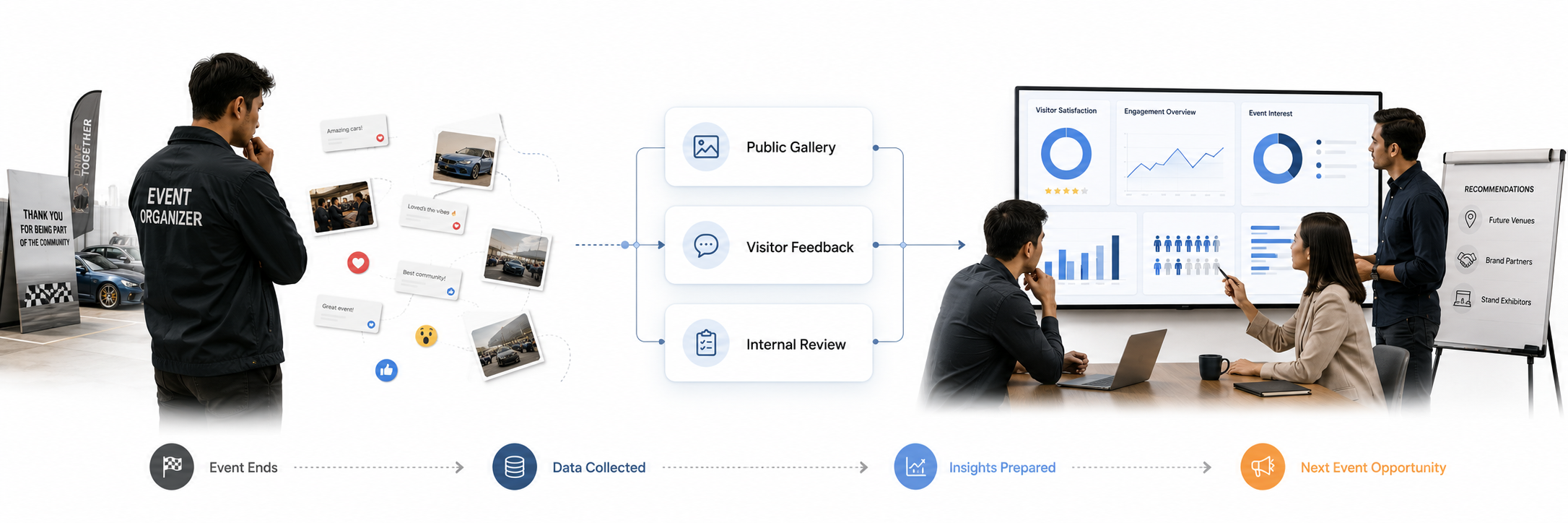
Without a post-event layer, the platform, and much of the value created during the event would lose momentum as soon as the live schedule ended. The response was to extend the experience through a public gallery, a visitor feedback flow, and an internal review workflow that preserved event documentation while turning visitor responses into structured, aggregated insights. Beyond helping the team close the current event more effectively, this data could support planning for Rides Collective Vol. 3 and provide stronger evidence when approaching potential venues, brand partners, and stand exhibitors.
Chapter 3. How It Was Built
This project represented the post-event extension of the Rides Collective product cycle. Instead of ending the platform at the event day, the system was expanded to handle public documentation and follow-up insights in a more structured way.
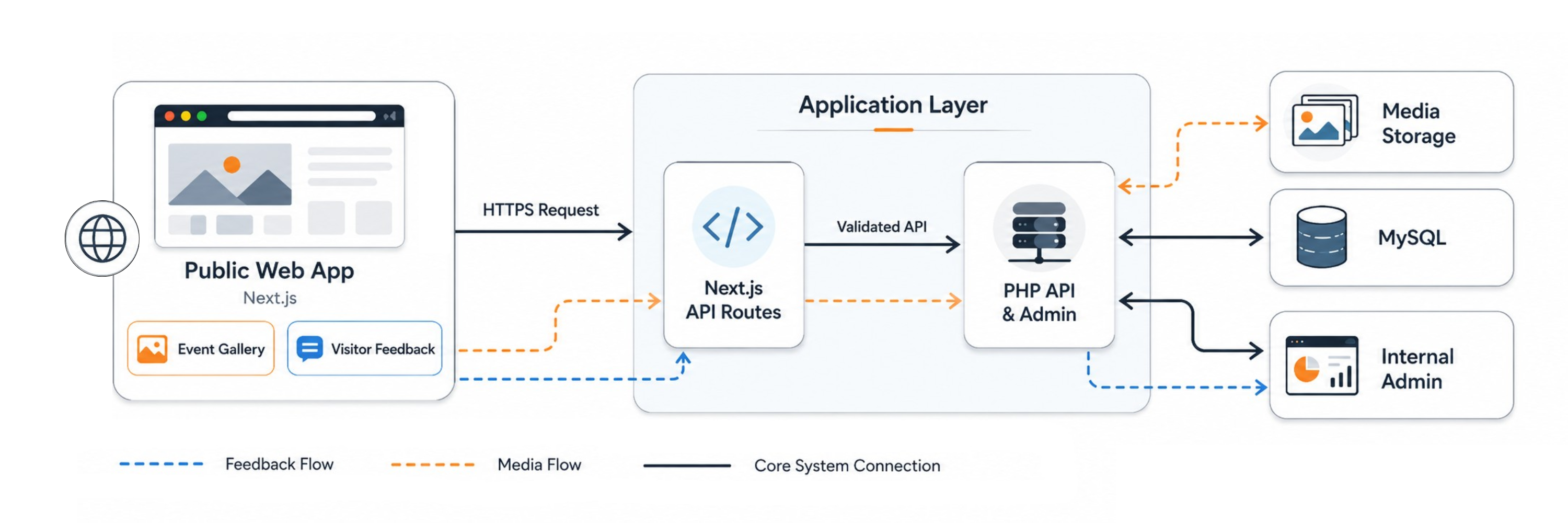
Implementation Flow: A public gallery route is prepared to publish event documentation as a natural continuation of the landing experience. A feedback collection flow is connected so visitor responses can be stored and reviewed after the event. Admin menus and follow-up workflows are updated so the internal team can moderate, review, and act on the post-event input more efficiently.
Implementation details included Public gallery page for post-event documentation, Feedback collection flow for visitor impressions, Admin menu updates for feedback review and follow-up handling, Post-event alignment between public pages and internal workflows, and Structured close-out support for the event cycle.
Some internal handling details have been intentionally generalized because the review workflow was part of a restricted operational environment.
Chapter 3a. Gallery Page Flow
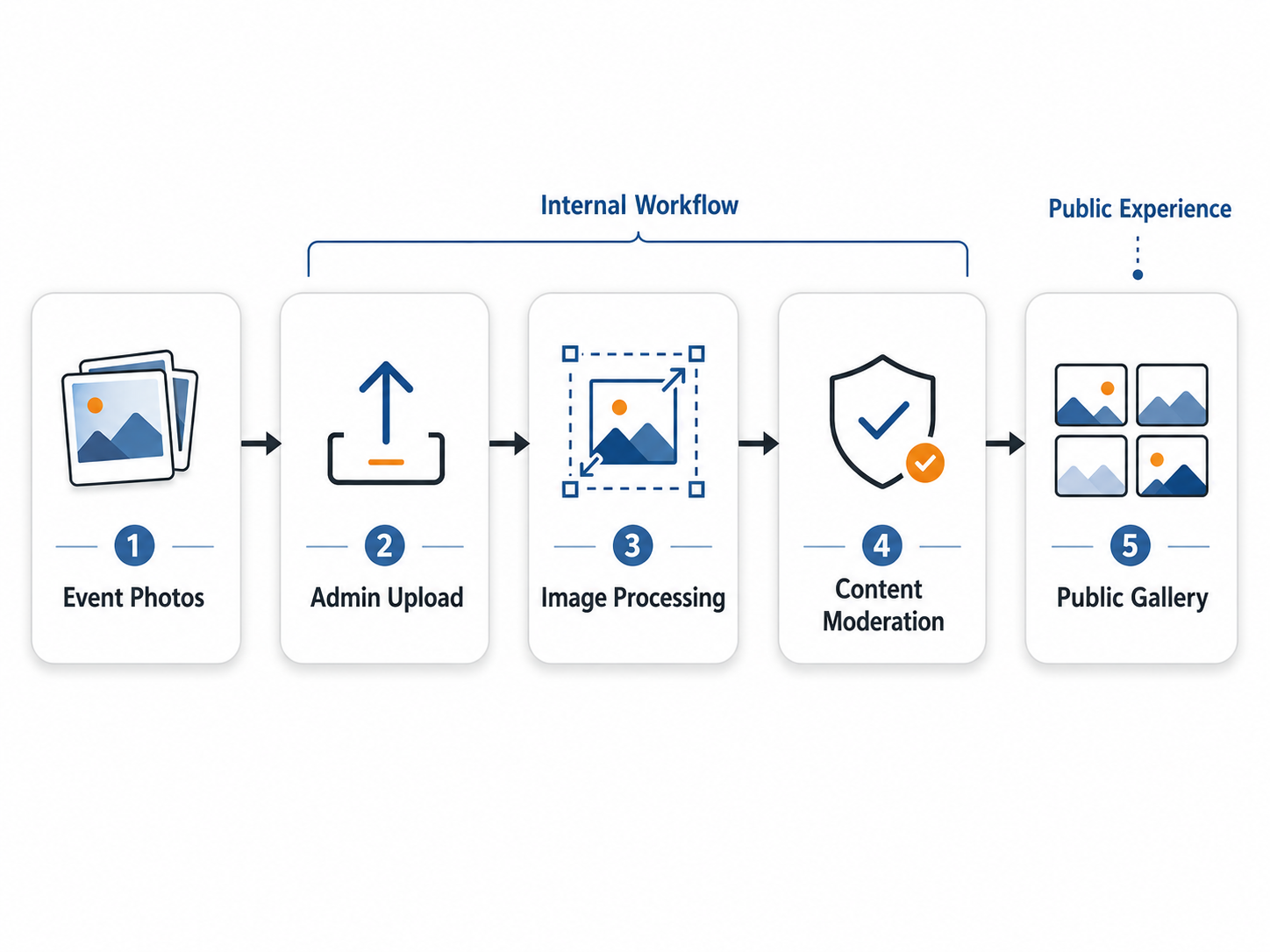
The gallery workflow begins with event photos being collected and uploaded through the internal admin system. Each image is processed into optimized formats before the team reviews its visibility and presentation. Only approved content is published to the public gallery, allowing visitors to browse the post-event documentation without exposing the internal content-management process.
Chapter 3b. Feedback Page Flow
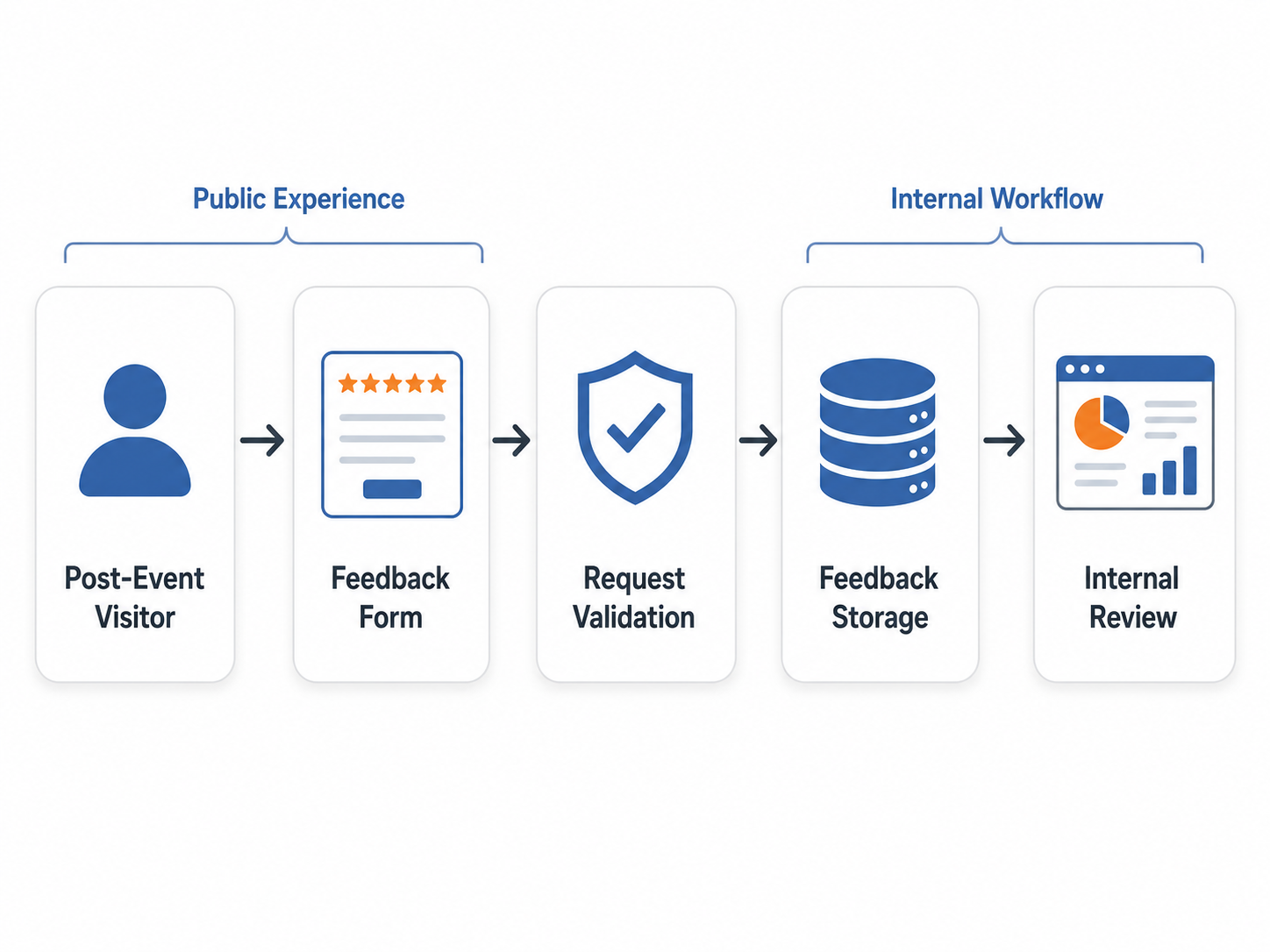
The feedback workflow begins when a post-event visitor submits a rating and written impression through the public form. The application validates the request before securely storing the response, making it available within the internal review interface. This separation keeps the visitor experience simple while giving the team a structured way to evaluate feedback and support the event close-out process.