Chapter 1. One Public Event Experience
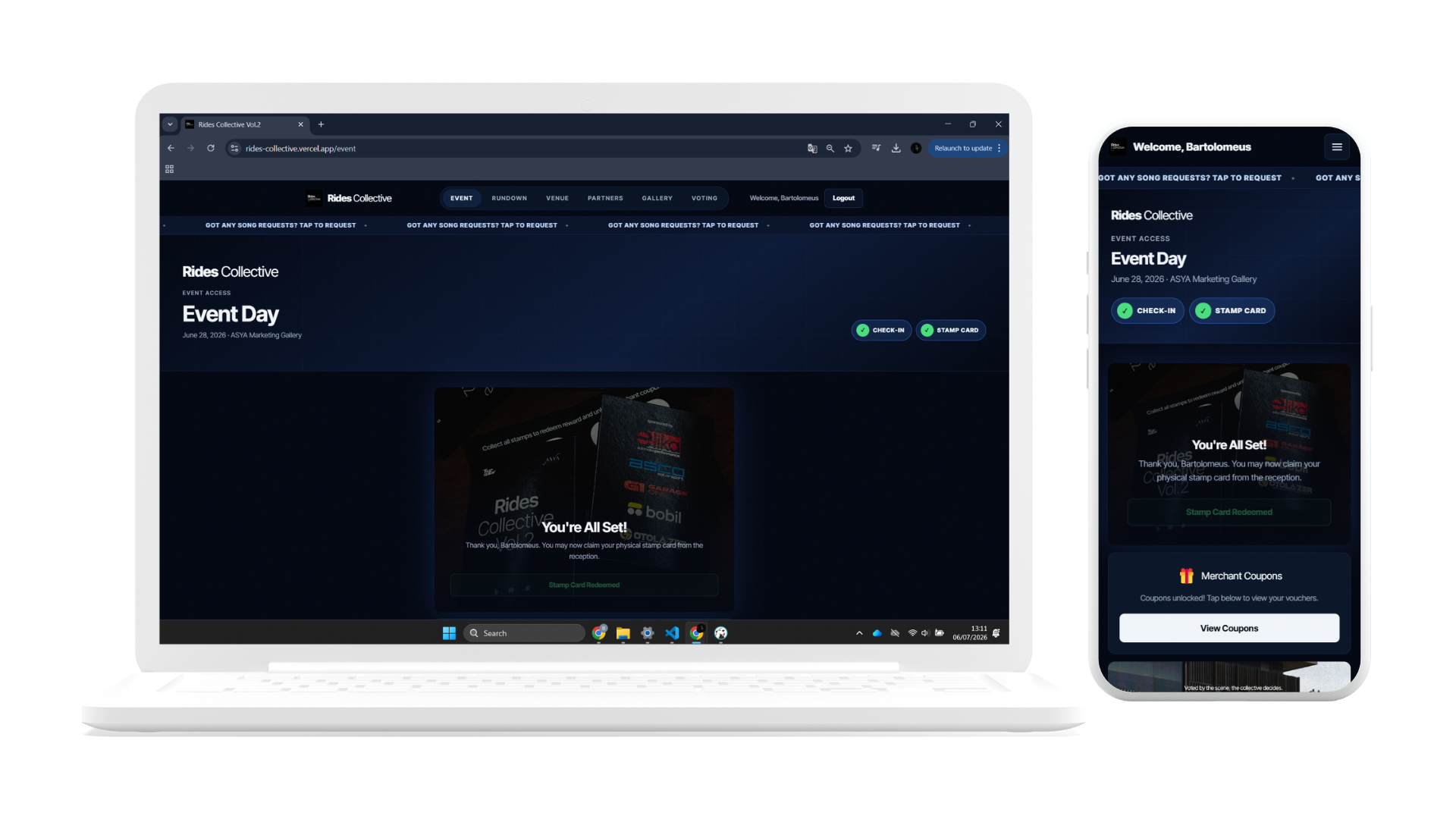
Rides Collective needed more than a promotional landing page. The public product had to introduce the event, register participants, support returning visitors, and remain useful during the live event across desktop and mobile devices. I developed the experience as one responsive journey, translating event requirements and stakeholder input into a consistent interface with clear navigation and a recognizable visual identity.
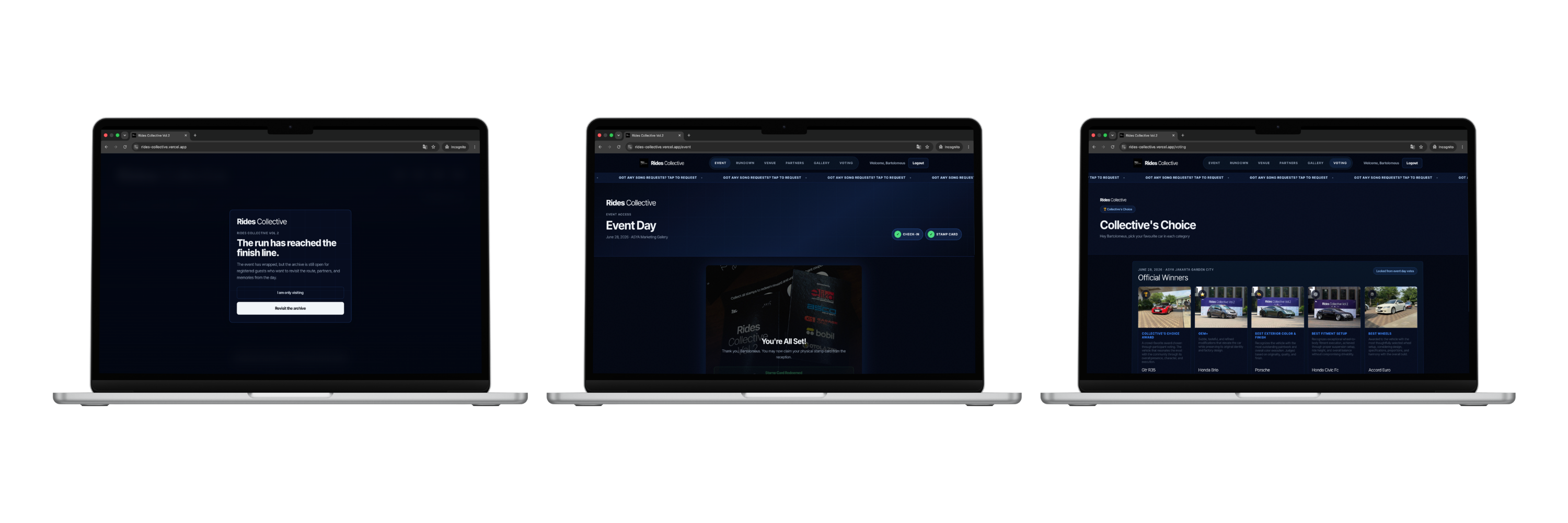
The result connected the full public lifecycle: registration before the event, participant access and utilities during the event, voting participation, and a controlled transition into event close-out.
Chapter 2. The Problem and the Product Response
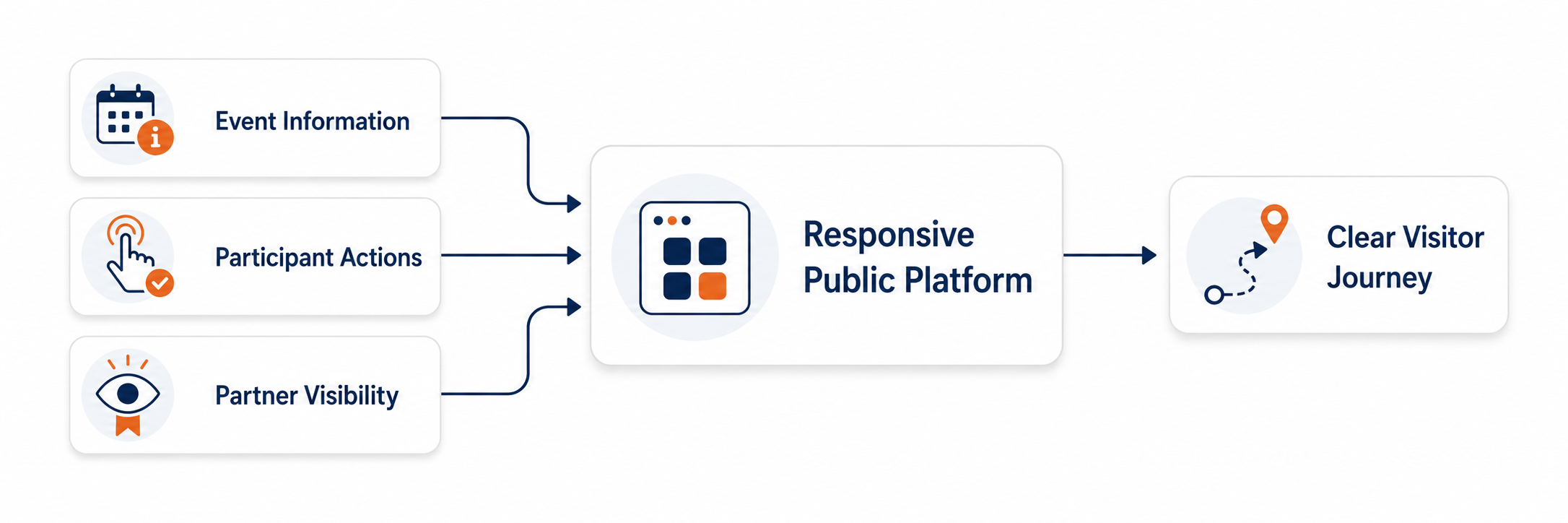
Event information, participant actions, partner visibility, and live-day utilities could easily become disconnected pages with inconsistent priorities. Visitors needed one clear path from discovering the event to taking part in it, while stakeholders needed their information represented without overwhelming the experience.
The response was a single responsive platform that organized these requirements around the visitor journey. Shared navigation, consistent content hierarchy, and event-state-aware screens allowed the product to change with the event lifecycle while retaining one visual and interaction system.
Chapter 3. Registration and Event Access
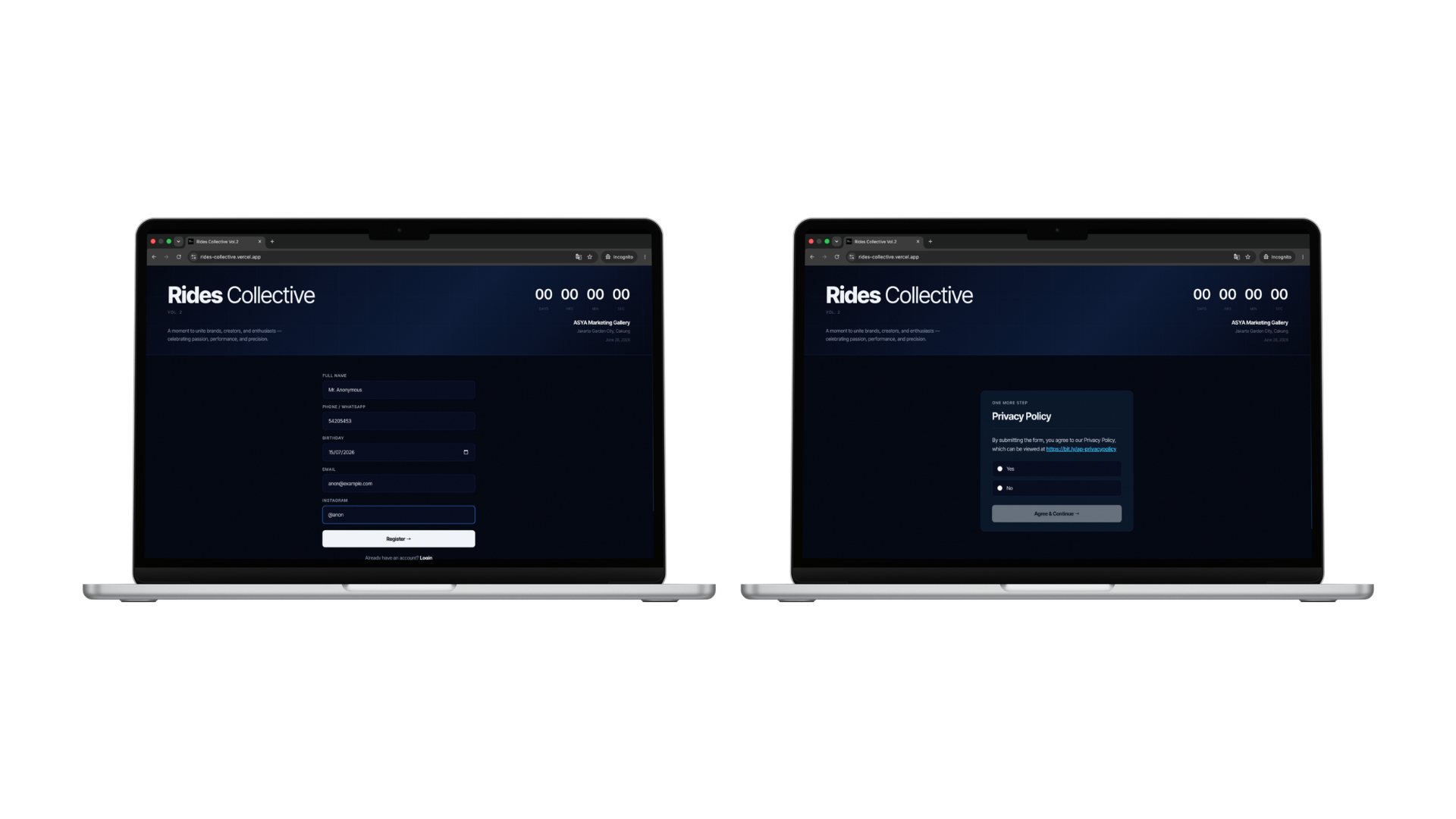
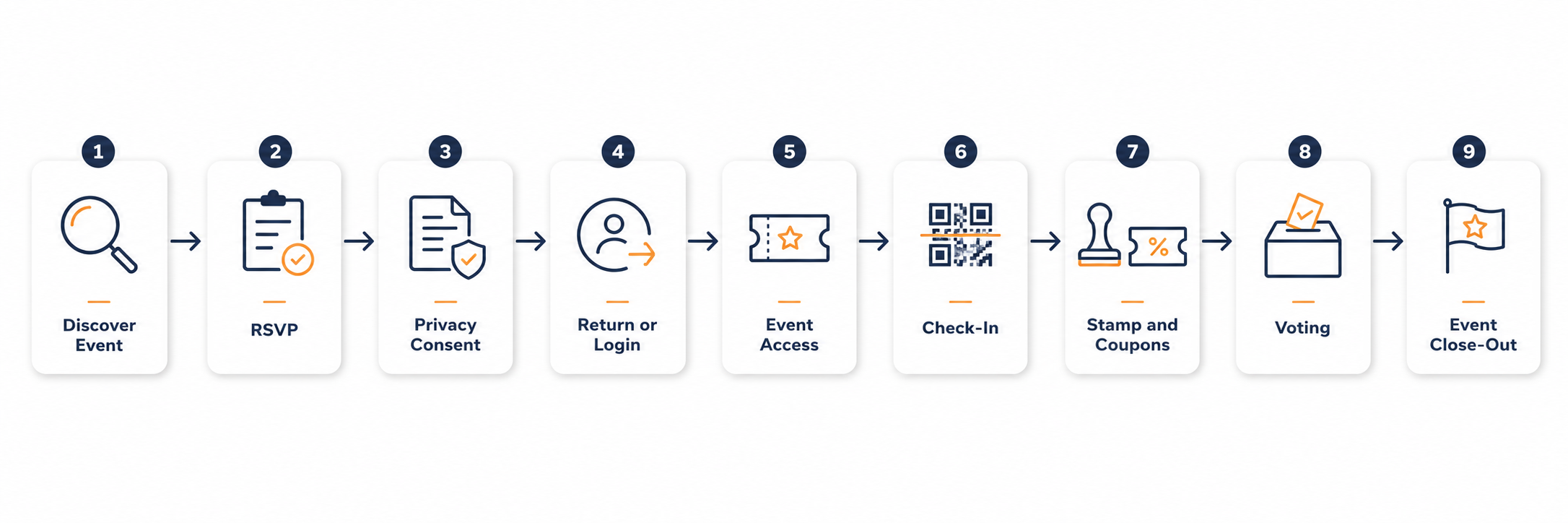
The pre-event journey began with an RSVP form that collected the information required for participation. A separate privacy-consent step kept the agreement visible within the flow instead of hiding it inside the registration form. Returning participants could continue through a phone-number lookup without repeating the full registration process.
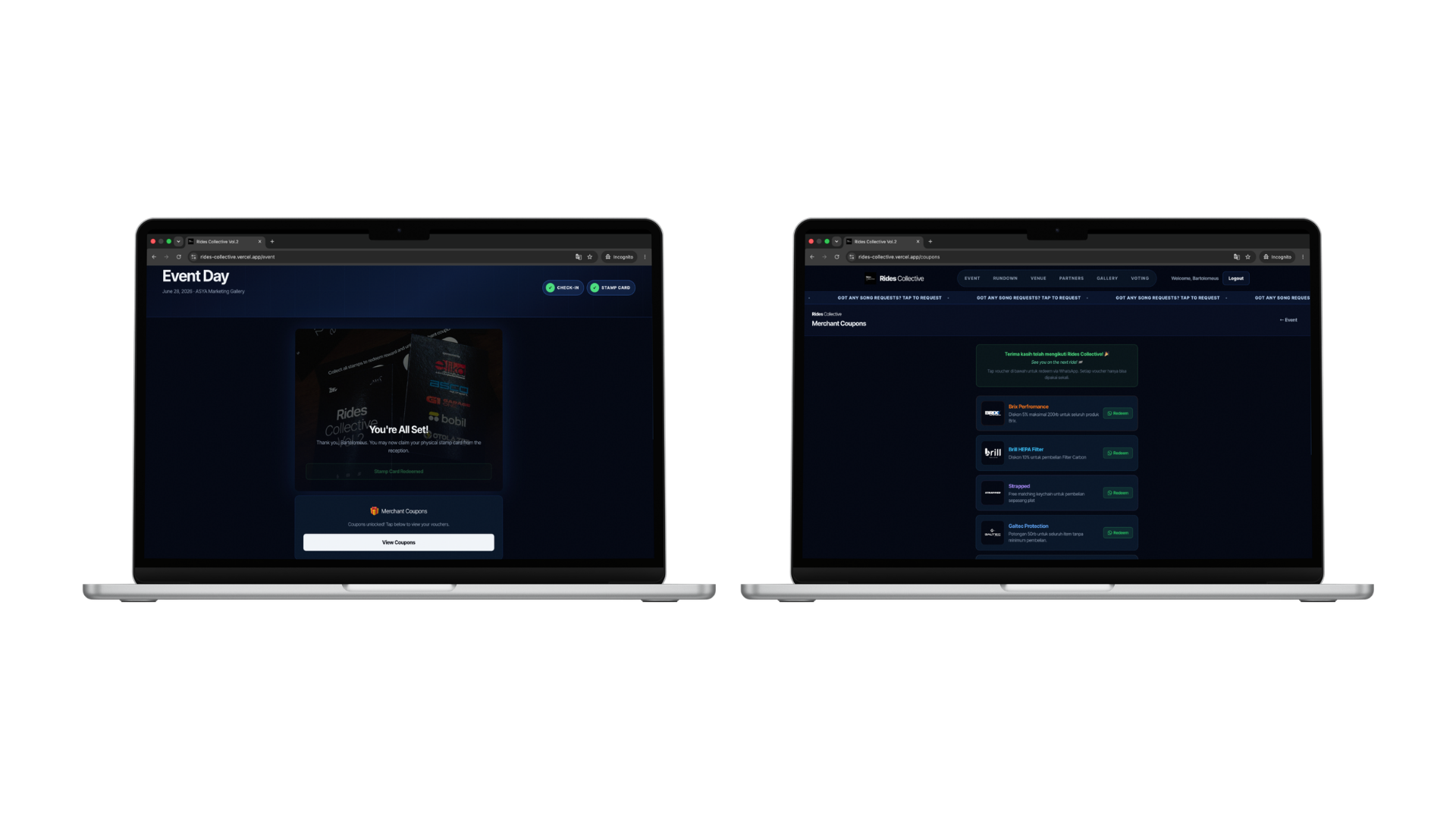
During the event, the participant state continued into Event Access. Check-in, stamp-card progress, and merchant coupons were presented as connected stages so visitors could understand what was available next. The interface exposed the participant-facing status while keeping operator actions and restricted controls outside the public journey.
Chapter 4. Event-Day Utilities
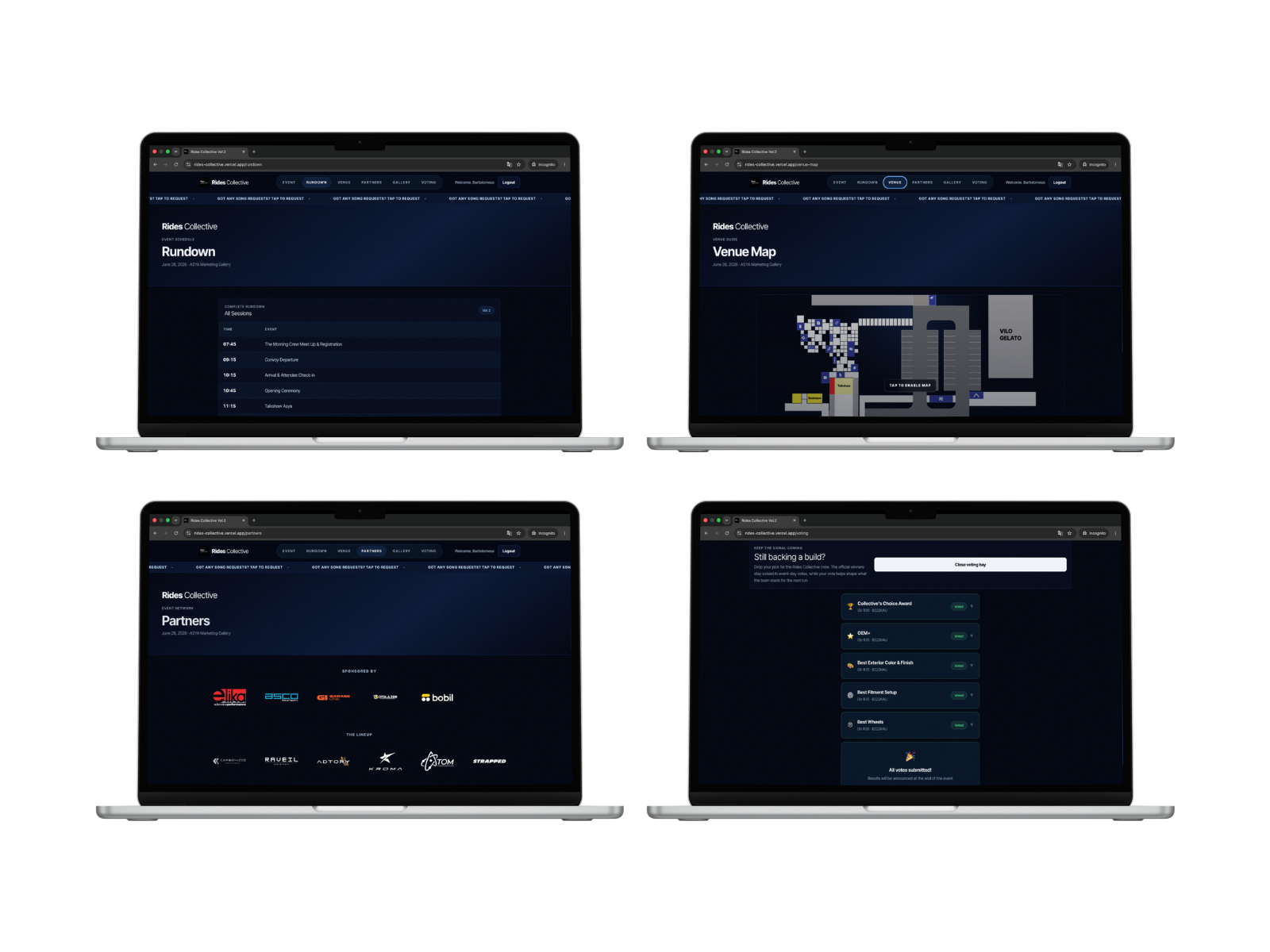
The public platform also acted as an event companion. Rundown made the schedule easy to scan, Venue Map supported on-site orientation, Partners gave participating brands a dedicated presence, and Voting connected visitors with the event categories and results. A shared responsive navigation kept these utilities accessible without turning the landing experience into a disconnected collection of links.
Chapter 5. Technical Delivery
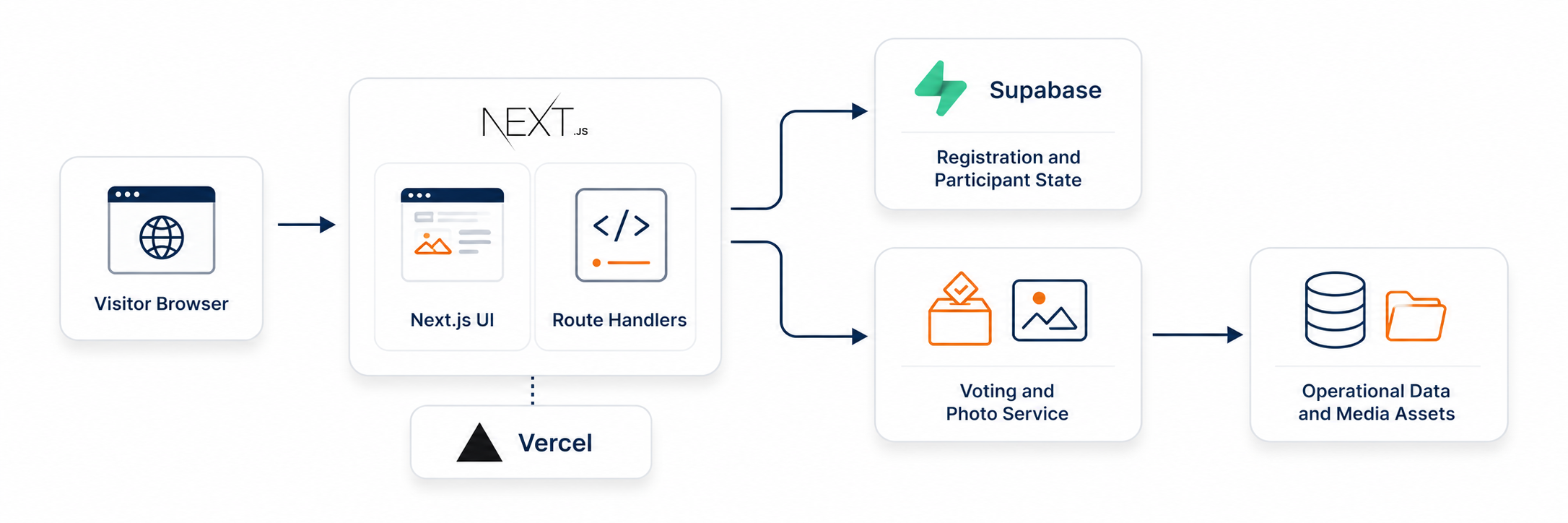
The application was built with the Next.js App Router, React, TypeScript, and a custom responsive interface deployed on Vercel. Next.js route handlers provided the server boundary for public actions. Supabase stored registration and participant-state data, while the voting and photo experience connected through a separate service responsible for operational records and media assets. Static event content such as the rundown, venue information, partner presentation, and navigation structure remained part of the application source so each route could be delivered as a controlled event experience.
Chapter 6. Application Flow
The visitor journey moved from event discovery into RSVP and privacy consent, then allowed returning participants to continue into event access. During the live event, check-in status, stamp and coupon progression, and voting became part of the same public experience. The final state closed the live-event journey and prepared the platform for the separate post-event gallery and feedback phase.